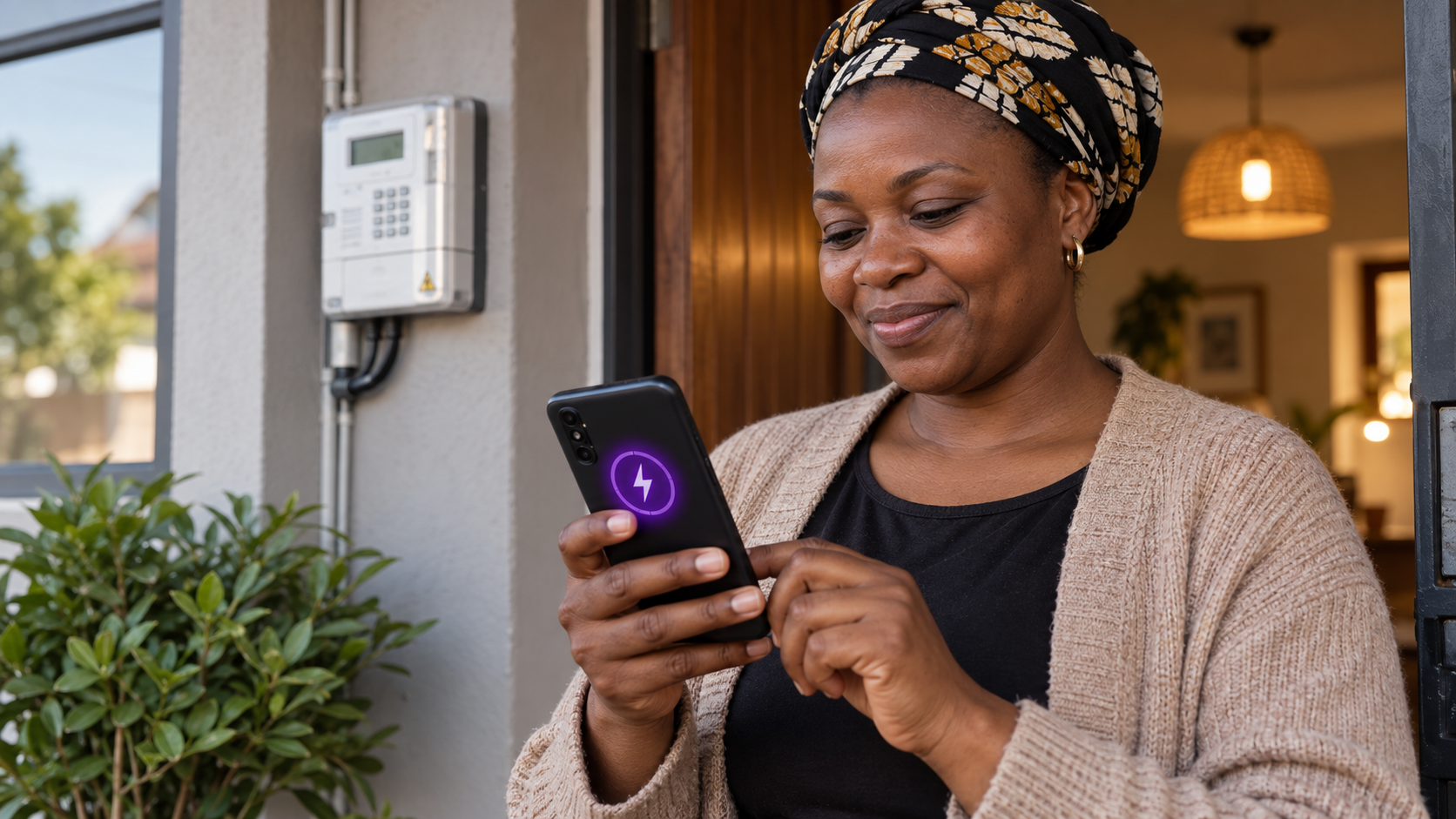
On 9 September 2026, Optasia provided more detail on the proposition developed with Finergi, which it acquired in March for an initial $30 million. The model embeds a credit advance within the prepaid electricity purchase journey. An eligible customer requests an advance, receives an electricity token and repays through a later top-up under the applicable product terms.
Optasia describes the product as a response to a temporary liquidity gap. On 15 September, Business Day reported that the group had begun the work required to offer electricity-lending products. Optasia’s official Electricity Advance page confirms that the proposition uses its decisioning, distribution and credit lifecycle infrastructure.
Several decisive facts remain undisclosed: the exact pilot countries, average advance, maturity, total cost, approval rate and repayment performance. These gaps prevent any conclusion that the product has already improved financial inclusion. They instead define what needs to be measured.
The economic problem being addressed
In a prepaid system, electricity access stops when the available credit is exhausted. A household may receive regular income but still face a gap of several days between its meter running out and the next salary or income payment.
The advance is intended to bridge that gap. Its potential value is not limited to the amount borrowed. It depends on the cost avoided by keeping electricity available: preserved food, lighting, phone charging, home-based work or the operation of essential equipment.
From the customer’s perspective, a first evaluation can be stated as:
Net value = economic cost of the avoided outage − total cost of the advance.
If the advance consistently costs more than the value of the service maintained, the product shifts the problem rather than solving it.
The top-up journey becomes financial infrastructure
The innovation is not simply another microloan. It lies in using the electricity top-up journey as a distribution, decisioning and repayment point.
The provider can observe consumption or recharge history, assess eligibility, issue the token and integrate repayment into a later transaction. This can reduce friction: the customer may not need to open a conventional credit account or visit a branch.
It also changes the role of the prepaid meter. The meter becomes an endpoint in a financial system embedded within an essential service. The ecosystem may include the utility, token distributor, technology provider, funder, mobile channel and, depending on the market, a regulated financial institution. Each party’s responsibility must be explicit.
Inclusion or dependency? A testable hypothesis
Occasional access to an advance may protect a household from interruption. Repeated use may indicate a structural income shortfall. The two situations require different responses.
The product supports inclusion when advances remain occasional, transparent and proportionate to repayment capacity. It becomes concerning when the customer must borrow during every cycle to preserve the same minimum consumption.
Usage frequency is therefore a central metric. High repeat use may indicate satisfaction, but it may also indicate dependency. It needs to be combined with repayment timing, disposable income, complaints and changes in the amount borrowed.
The minimum evidence required
A serious evaluation should publish or monitor at least the following variables:
- average and median advance size;
- actual time between disbursement and repayment;
- total monetary cost and equivalent rate;
- approval rate by customer segment;
- share of users taking another advance across three consecutive cycles;
- delinquency, restructuring and default rates;
- change in amount borrowed per customer;
- volume and type of complaints;
- share of a future payment absorbed by repayment;
- duration of electricity access preserved by the advance.
Credit volume alone would not measure impact. The provider would need to demonstrate that the service prevents interruptions without creating persistent financial vulnerability.
Credit decisioning and the data used
Optasia says its engine applies decisioning and lifecycle-management capabilities. Further analysis should establish which data informs eligibility: recharge history, consumption frequency, repayment behaviour, mobile money data or other signals.
Each variable should be tested against three criteria: relevance to risk, customer consent and exclusion risk. Irregular consumption does not necessarily mean lower creditworthiness. It may reflect seasonal income or network outages. A poorly calibrated model could confuse poverty, technical instability and credit risk.
The regulatory question
In South Africa, the National Credit Regulator supervises credit providers under the National Credit Act. The exact product structure will determine each participant’s obligations concerning registration, affordability assessment, cost disclosure, complaints and collection practices.
The market will need to know who legally extends the credit, who sets the price, who carries the default risk and how repayment is taken from the next top-up. The presence of a technology partner does not automatically transfer regulatory responsibility.
A model that could extend beyond electricity
If the architecture works, it may be adapted to other prepaid services such as water, gas, connectivity, transport or essential subscriptions. The extension would not be automatic. Each service has its own cost structure, regulatory framework and social consequences.
The commercial potential comes from payment frequency and the ability to embed credit in a familiar journey. The risk comes from repeated small advances whose cumulative cost may become difficult for customers to see.
What must be verified before claiming impact
Optasia’s announcement describes a concrete innovation in credit distribution. It does not yet demonstrate improved financial inclusion. That conclusion requires evidence on pricing, repeat use, defaults, avoided outages and the treatment of vulnerable customers.
The decisive test will not be the number of advances issued, but the path customers follow after several months. Did they use the product to bridge a temporary gap, or do they now need to borrow for every recharge?
Only then can prepaid electricity become a tool for financial resilience rather than a new channel for invisible debt.
Sources
- Optasia: introduction to Finergi and Electricity Advance, 9 September 2026
- Optasia: official Electricity Advance product journey
- Business Day: launch progress, 15 September 2026
- Optasia: 2025 results and operating data
- IFC and National Credit Regulator: responsible-credit support framework in South Africa