On 9 September 2026, PhonePe announced that it had secured its first international licence from the Central Bank of the United Arab Emirates. The Indian company plans to make the UAE its first locally operated market outside India.
According to founder and chief executive Sameer Nigam, the authorisation will allow PhonePe to acquire merchants, deploy payment terminals and provide foreign-exchange services. The company has not yet disclosed a firm launch date.
The announcement should be distinguished from PhonePe’s existing international footprint. Until now, its services abroad were mainly designed for Indian users travelling overseas and paying from Indian bank accounts. The UAE licence opens a different chapter: building a local operation in a foreign market.
From UPI acceptance to a local presence
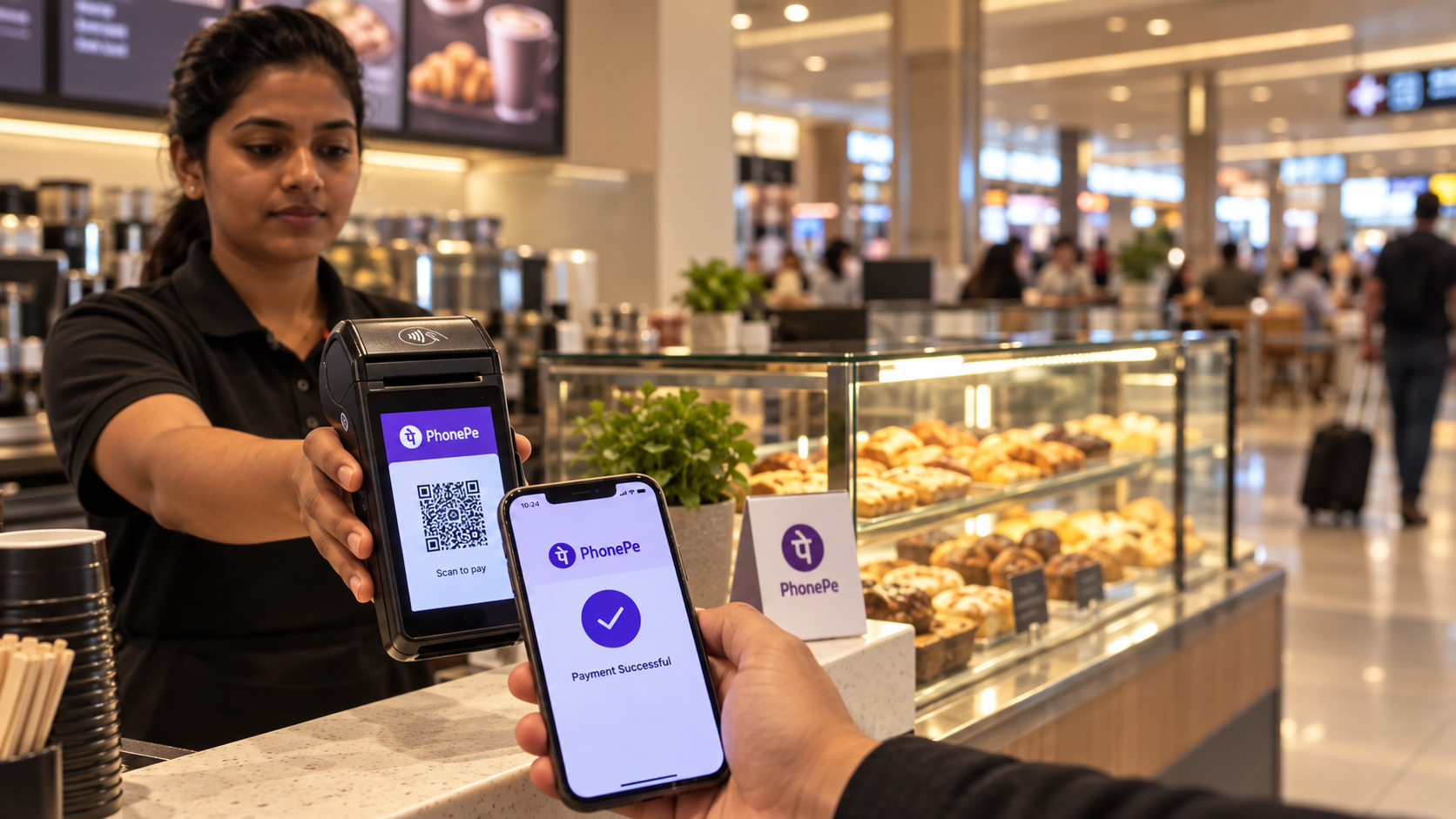
PhonePe users could already make UPI payments in the UAE through participating terminals. In March 2024, acceptance was introduced across Mashreq’s NEOPAY network, with transactions routed through NPCI International Payments.
Under that model, the customer remained a user of India’s payment system. The PhonePe app and an Indian bank account were used to pay a merchant located in the UAE. The experience was cross-border, but the payment instrument and banking relationship remained rooted in India.
The new licence broadens the scope. PhonePe will be able to establish direct relationships with local merchants, provide the required acceptance equipment or solutions and participate more extensively in the UAE payment value chain.
This distinction matters. Enabling a foreign payment method through local partners is not the same as operating a local acquiring business. The latter requires regulatory approval, operational capacity, compliance controls, merchant-risk management, settlement arrangements and market-specific support.
Why the UAE is a logical entry point
The choice of the UAE fits an established corridor between India and the Gulf. PhonePe already had a practical use case among Indian travellers, while UAE merchants had gained exposure to UPI through acceptance partnerships.
The company is therefore not entering a completely unfamiliar market. It can build on recognition among part of the visitor base, payment behaviour that has already been tested and an ecosystem seeking to strengthen its position as a regional financial hub.
Regulation is another important factor. Retail payment services in the UAE are governed by the Central Bank’s Retail Payment Services and Card Schemes Regulation, introduced in 2021. The framework requires relevant providers to obtain a licence and sets expectations covering governance, risk management, safeguarding, security and customer conduct.
A licence is therefore more than permission to launch another app. It provides a regulated basis for entering the market with a defined scope of activities.
A change in operating model for PhonePe
In India, PhonePe grew on UPI, shared infrastructure that allows multiple banks and applications to offer interoperable instant payments. The company built distribution, user experience and adjacent services around that public rail.
That architecture cannot simply be exported unchanged. Each market has its own licensing regime, infrastructure, participants, foreign-exchange rules and acceptance habits. PhonePe must adapt its model, establish local connections and decide which activities it wants to operate directly.
The UAE authorisation reflects this shift. PhonePe is moving beyond helping UPI travel outside India and towards becoming a local payments participant with broader operational and regulatory responsibilities.
What African payment companies can observe
The relevance for Africa is not that the Indian or Emirati model should be copied. The more useful lesson lies in the sequence of expansion.
PhonePe first served its users along a specific international corridor. It then enabled acceptance through established local partners. It is now obtaining a licence that allows direct merchant relationships and a broader local service offering.
For an African fintech considering entry into a new market, this sequence raises practical questions. Is there an active corridor that can support an initial use case? Which service can be delivered before building a full local stack? Which partners can test acceptance? At what point does a local licence become necessary to capture more value and control the customer experience?
The licence does not guarantee commercial success. PhonePe still needs to clarify its timetable, products, partners, pricing and positioning against banks, acquirers and fintechs already operating in the UAE. It must also show that an advantage built around Indian travellers can become a relevant proposition for local merchants and customers.
Execution is the next test
The 9 September announcement confirms PhonePe’s international ambition, but several details remain open. The company has not yet disclosed the launch date for its local operation or the full scope of products it will offer.
The next signals will therefore be operational: the first merchants acquired, the type of terminals or acceptance solutions deployed, the foreign-exchange services actually made available, banking or settlement partnerships and connections to local infrastructure.
Moving from cross-border acceptance to a regulated local presence is a significant step. Its real importance will now be measured through execution.