
Since 3 August 2026, CEMAC has had a new regional clearing platform. SYSTAC 2 marks an important step in the modernisation of Central Africa’s payment infrastructure. To understand what it actually changes, however, it is necessary to distinguish clearing, settlement, instant payments and connectivity to pan-African payment systems.
On 12 August 2026, the Bank of Central African States (BEAC) announced that SYSTAC 2 had been in production since 3 August. The platform replaces the previous version of the Central African Automated Clearing System, which had been operating since 2007.
SYSTAC 2 handles retail payment transactions exchanged between participating institutions in CEMAC’s six member states: Cameroon, the Central African Republic, Chad, the Republic of the Congo, Equatorial Guinea and Gabon. Its scope includes credit transfers, direct debits, cheques and card transactions.
This deployment could be seen as a straightforward technology upgrade. In reality, it is one part of a much broader transformation. CEMAC is modernising its clearing house, its large-value settlement system, its financial messaging standards and, eventually, its instant payment infrastructure. BEAC’s recent move to join the Pan-African Payment and Settlement System, PAPSS, adds a future cross-border dimension to this architecture.
This raises a broader question: is Africa finally building payment infrastructures that can work together?
SYSTAC 2 primarily modernises interbank clearing
When a customer at one bank sends money to a customer at another bank, the two institutions must exchange the payment instruction, calculate what they owe each other and settle the resulting financial position. Clearing is the stage during which these obligations are organised and calculated.
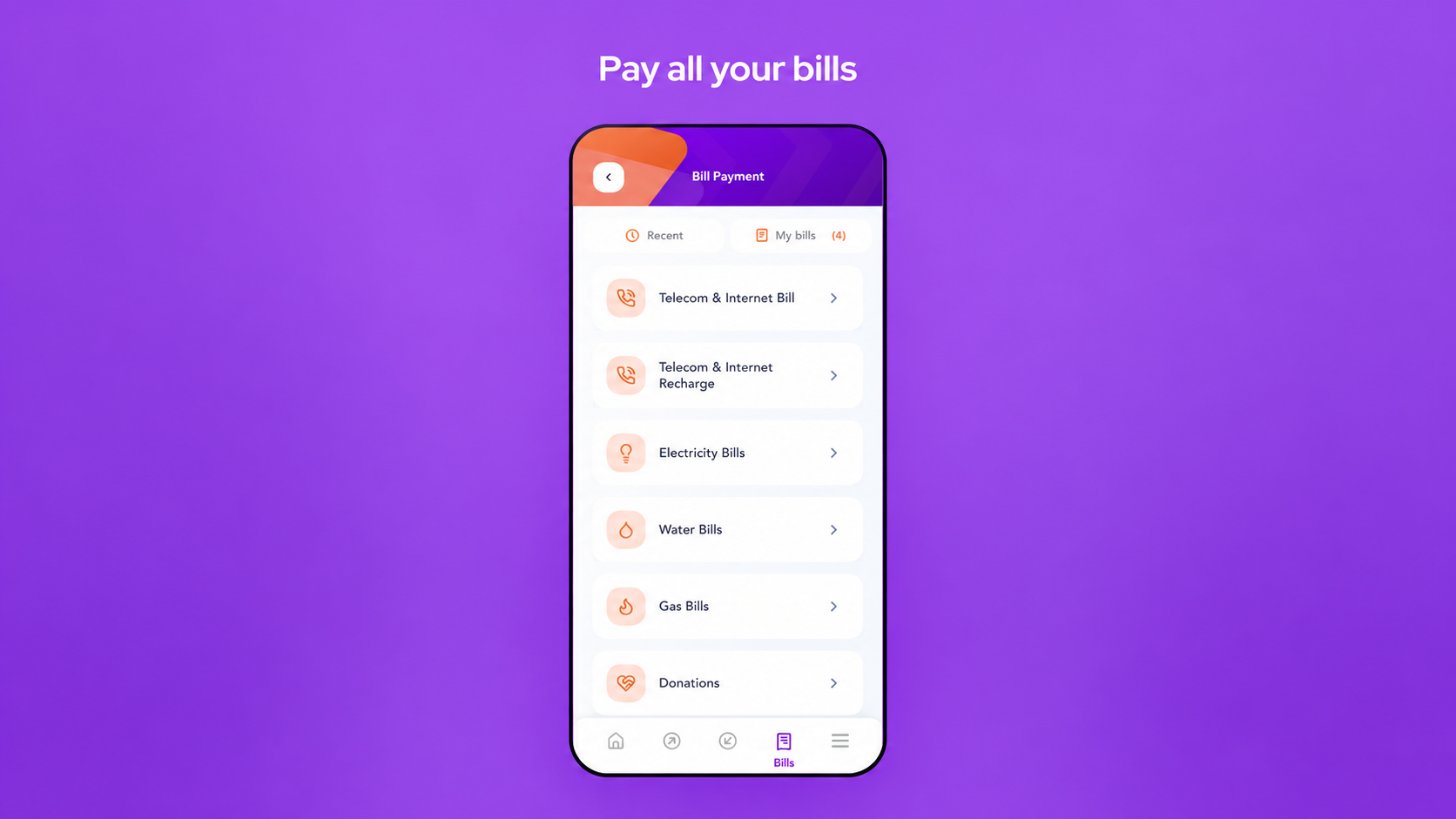
SYSTAC 2 is an electronic clearing house. It is not a consumer-facing application or a new digital wallet. It operates within the underlying infrastructure that allows financial institutions to exchange and process transactions.
According to BEAC, SYSTAC 2 is built on a centralised and secure architecture that is fully accessible online. The system includes an automated clearing module, a dispute management module and an instant payment module. The instant payment component will be deployed at a later stage. It would therefore be inaccurate to suggest that all payments processed through SYSTAC 2 are already instant.
The inclusion of card transactions also requires some clarification. A clearing house does not necessarily replace the payment switches, processors or card networks that route and authorise card transactions. It operates at the layer where obligations between participating institutions are exchanged and cleared. The precise relationship between SYSTAC 2, regional card payment systems and the various card networks will depend on the operating rules applied to participants.
Clearing, settlement and instant payments perform different functions
BEAC’s wider programme becomes easier to understand when three functions that are often conflated are considered separately.
The first is retail payment clearing. It groups large numbers of transactions, calculates the net positions of participants and prepares those positions for settlement. This is the main role of SYSTAC 2.
The second is settlement in central bank money. In CEMAC, this function is performed by SYGMA, BEAC’s real-time gross settlement system. It handles urgent and large-value payments, among other transactions, and settles the balances generated by clearing systems. BEAC announced that the new version, SYGMA V10, was being finalised and was expected to go live in the weeks following its 12 August statement.
The third is instant retail payment. For users, this means being able to send money at any time, with the recipient receiving funds that are immediately available, including when the two parties use different financial institutions. Such a service requires continuous availability, common operating rules, real-time risk management and interoperability between banks, payment institutions, electronic money providers and, depending on the chosen model, other financial institutions.
SYSTAC 2, SYGMA V10 and the future instant payment module are not three versions of the same system. They are distinct components that must complement each other to form a coherent payment infrastructure.
CEMAC and WAEMU are following different paths
A comparison with the West African Economic and Monetary Union, WAEMU, provides useful context.
WAEMU already has SICA-UEMOA for the clearing of retail payments and STAR-UEMOA for real-time gross settlement. PI-SPI, the Interoperable Instant Payment System Platform launched by the Central Bank of West African States on 30 September 2025, has now been added to that architecture.
PI-SPI was designed to support payments between different types of accounts, whether held at a bank, an electronic money institution, a microfinance institution or a connected payment institution. It operates continuously across WAEMU’s eight member states. As of 24 June 2026, the BCEAO reported that 80 participants were connected and another 74 institutions were undergoing live testing.
CEMAC is following a different timetable. It has just put its new clearing house into production, is preparing the launch of SYGMA V10 and plans to activate SYSTAC 2’s instant payment module at a later stage. The two monetary unions nevertheless share a comparable ambition: to build regional infrastructures that can move payments between multiple institutions and countries under common rules and standards.
The difference at this stage is significant. In WAEMU, the instant payment system is already available to the public through authorised participants, although deployment is still expanding. In CEMAC, BEAC’s announcement does not yet provide a launch date for the instant payment module, its access conditions or the categories of institutions that will be able to connect directly.
ISO 20022 provides a common language, not automatic interoperability
One of the major changes introduced with SYSTAC 2 is the adoption of the ISO 20022 standard. The standard structures financial messages around richer, more organised data. Instead of carrying only a limited set of details that can be difficult to process automatically, a message can include standardised information about the parties, payment references, the purpose of the transaction and other data required for processing.
This can improve reconciliation, transaction traceability, automated controls and the quality of compliance analysis. More complete data can also help institutions screen transactions more accurately and resolve certain alerts more efficiently.
ISO 20022 should not, however, be presented as an automatic solution to fraud or reconciliation problems. It provides a shared language and data structure. The actual benefits depend on the quality of the data entered, whether that data is preserved across the entire payment chain, how consistently participants apply the rules and whether their internal systems can use the information effectively.
Two infrastructures can therefore use ISO 20022 without being immediately connected to each other. To work together, they also need compatible operating rules, shared identifiers, foreign-exchange and liquidity mechanisms, common compliance procedures, a framework for resolving disputes and clear arrangements for final settlement.
PAPSS adds the pan-African dimension
BEAC’s membership of PAPSS opens another possibility. PAPSS was designed to facilitate cross-border payments in local currencies between African markets, working with central banks, commercial banks and authorised payment service providers.
PAPSS stated that it would work with BEAC through the end of 2026 to operationalise the membership, integrate financial institutions across CEMAC and prepare the rollout of services to businesses and individuals.
PAPSS therefore does not replace SYSTAC 2 or CEMAC’s future instant payment system. Its role is different: it can connect the regional ecosystem to other African markets. For a payment to move smoothly from an account in Cameroon to a recipient in Ghana, Kenya or another connected market, the relevant domestic or regional infrastructure must be able to route the instruction into the pan-African layer and support settlement, any required currency conversion and compliance checks.
The real test will not be BEAC’s institutional membership alone. It will be whether that membership produces services that are genuinely accessible, reliable and affordable for users.
Interoperability will ultimately be measured through usage
The deployment of SYSTAC 2 is a significant development for CEMAC. It modernises infrastructure that had been in operation for almost two decades and prepares the region for additional services. Together with SYGMA V10, the future instant payment module and gradual connection to PAPSS, it points towards a more coherent payment architecture for Central Africa.
The existence of several platforms will not, by itself, create an integrated African payment area. Success should be measured through concrete outcomes: how many institutions are actually connected, whether authorised non-bank providers can participate, service availability, reductions in processing times and costs, the quality of incident management and whether a user can pay beyond their own provider or country without facing a complex process.
Africa no longer lacks regional and continental payment initiatives. It is beginning to assemble the technical building blocks it needs. The next stage, and probably the most difficult one, is to make those building blocks operate as an integrated whole. SYSTAC 2 is an important foundation, but the final answer will depend on how CEMAC connects its clearing and settlement systems, its future instant payment service and its access to PAPSS.