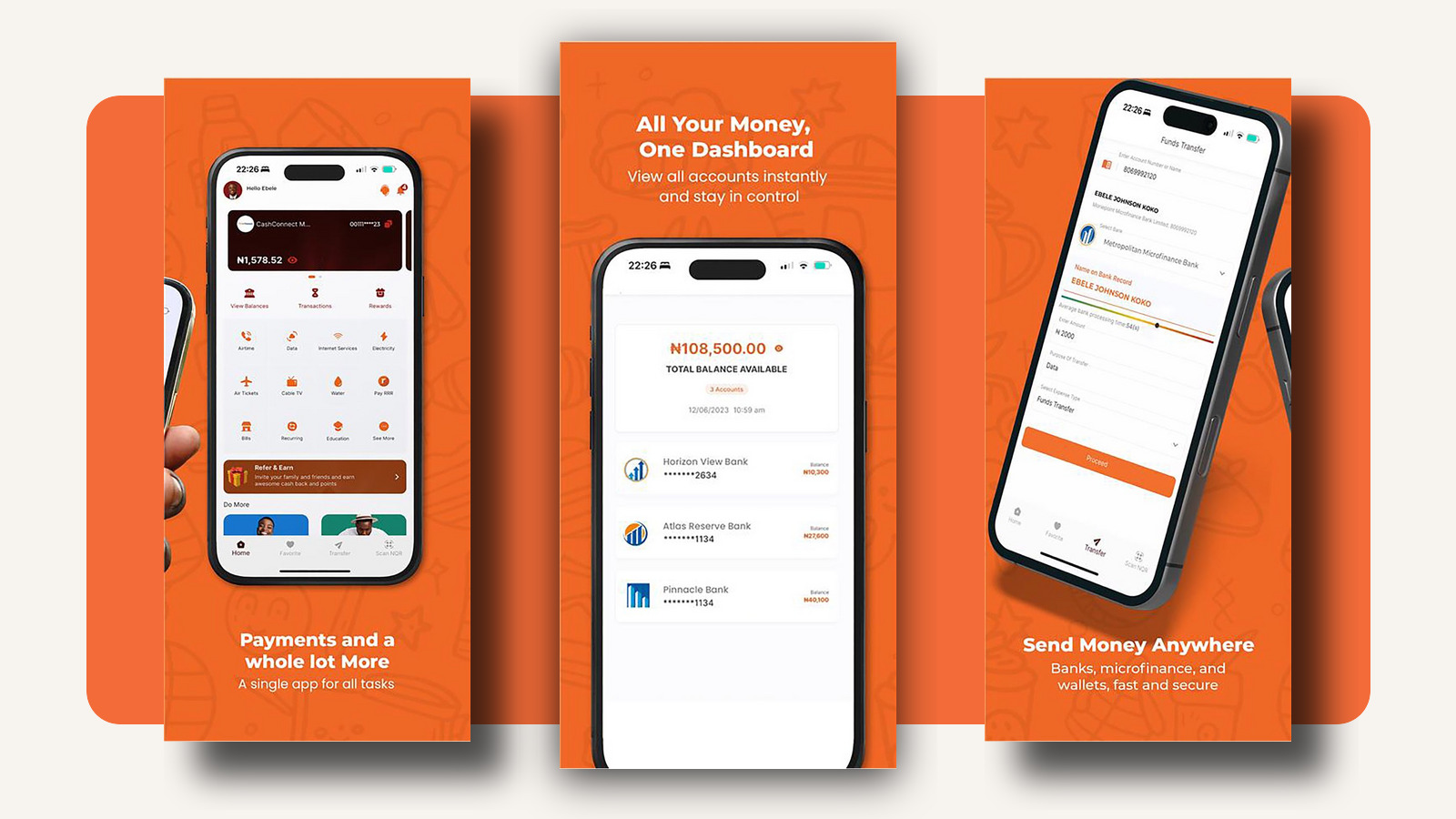
Remita unveiled a new version of its consumer app at Nigeria Fintech Week on 22 September 2026. The promise is straightforward: users can bring several bank accounts into one interface, view their balances and make payments without constantly switching between banking apps.
The official app listing mentions transfers to Nigerian banks, microfinance institutions and wallets, as well as banks elsewhere in Africa. Remita CEO Deremi Atanda also said that sixteen banks had been integrated and that cross-border payments would use the Pan-African Payment and Settlement System, PAPSS.
These announcements describe a meaningful change in the user experience. They do not mean that the accounts, banks and payment infrastructures have become one system. To understand the product’s reach, the visible screen must be separated from the chain that actually executes each transaction.
One dashboard does not create one account
An aggregated view can make it look as though the money has been pooled. In practice, funds remain with the banks or institutions that hold each account. Remita provides a common interface for displaying information and, where supported, initiating a transaction.
That distinction matters. A total shown on screen is not necessarily an amount that can be moved in one transaction. Each account retains its own rules, limits, controls, availability and update cycle. Service quality therefore depends as much on data freshness as on the design of the app.
Questions arise before a payment even begins. How does the customer authorise access to an account? What authentication does the bank require? How can consent be withdrawn? What happens if an institution stops responding or returns an outdated balance?
These are operational questions, not merely technical ones. A polished interface cannot, by itself, correct unavailable data or a control rejected by the source bank.
Four layers behind one button
1. Account aggregation
The app retrieves and displays data from multiple institutions. It must verify the account holder, the scope of consent and the frequency of updates. Users should also be able to distinguish confirmed bank data from information that is temporarily unavailable.
2. Payment initiation
When a customer chooses an account to pay from, the app sends an instruction. The source institution must authenticate the customer, check available funds and accept or reject the transaction. A centralised view simplifies the action, but it does not remove the bank’s rules or regulatory controls.
3. Domestic execution
The payment then moves through the bank’s systems, Remita and the infrastructure used to reach the beneficiary. Each participant may generate a different status: received, accepted, processing, rejected, credited or reversed. The operational challenge is to return one clear and final status to the customer.
4. Cross-border payment
The chain becomes longer when money moves between African countries. PAPSS allows customers to send and receive in local currencies and organises clearing and settlement between participants. The journey must still incorporate compliance checks, foreign exchange, liquidity, fees, the beneficiary bank and the handling of rejects or returns.
Remita cited Ghana, Kenya and Rwanda among the intended destinations. The public information reviewed does not provide a complete list of live corridors, reachable banks in each market, available currencies or the customer’s total cost. Those details need to be confirmed before the actual reach of the service can be assessed.
The real test begins when a transaction does not complete immediately
The quality of a multi-bank product becomes visible when a dependency slows down. A user may retry a payment if no confirmation arrives. The first instruction may already have been accepted while the response is still moving through the chain.
Without retry controls, that situation can produce a duplicate. Without a common reference, it can also complicate reconciliation between Remita, the source bank, the payment infrastructure and the beneficiary bank. The customer may see a debit, an uncertain status or a beneficiary who has not been credited, without knowing which party should act.
An app aggregating several accounts therefore needs to handle at least four scenarios precisely:
- the account is visible, but its balance cannot be refreshed;
- the instruction is rejected before any debit;
- the account is debited, but the final status remains unknown;
- a cross-border payment is returned after conversion or compliance review.
For each case, the product should show a clear status, prevent unnecessary retries, preserve evidence of the instruction and define the expected resolution time.
The figures that will reveal service quality
Remita says that thousands of users took part in the beta phase. That figure, like the number of integrated banks, comes from the company and is not accompanied by public performance metrics.
The next phase should therefore not be measured by downloads alone. Seven indicators would be more useful:
- account-linking success rate by bank;
- balance freshness and frequency of unavailable data;
- payment authorisation rate by source institution;
- end-to-end success rate by destination;
- time from initiation to final status;
- total cost, including foreign exchange and fees;
- resolution time for pending payments, returns and complaints.
These measures would separate three things that are often confused: feature availability, usage and reliability.
A useful promise that needs corridor-level evidence
The new Remita addresses a genuine problem: fragmented accounts and apps. For customers using several banks, one interface can reduce the number of steps and make their financial position easier to read. Adding African transfers could also remove another break in the journey.
But value will not come from the number of services shown on the home screen. It will depend on the consistency of the entire chain: understandable consent, reliable authentication, current balances, final statuses, visible fees, complete reconciliation and rapid incident resolution.
Remita has made the ambition of a pan-African app visible. The next task is to document, corridor by corridor and bank by bank, how much of that ambition is already operational.